
Loyalty without borders
Turning invisible discounts into recognition people could actually earn.
The context
Tier-based rewards and fixed discounts
MOL Group runs fuel stations across Central and Eastern Europe, with a cross-border loyalty program: one digital core, adapted per market. Supercharge was already their design partner when I joined, and MOL had chosen a tier-based model over a traditional earn-and-burn system.
Client: MOL Group, via Supercharge
Role: UI Designer
Scope: UI Flows, Illustrations, Design System
Duration: 4 months
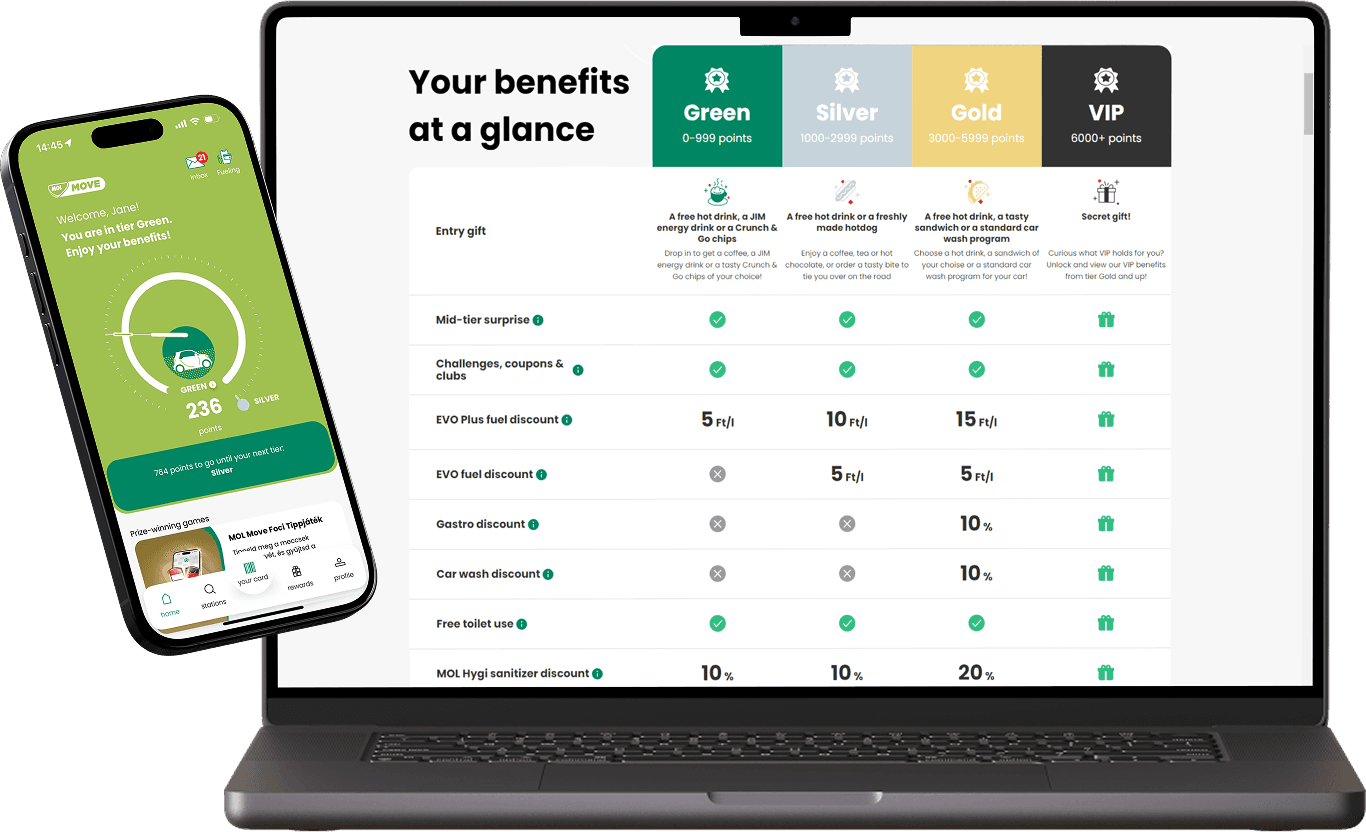
The four tiers: predictable discounts instead of point-burning math.
1 000 000
downloads

750 000
monthly users

100 000 - 150 000
daily users

The problem
Rewarded, but not recognized
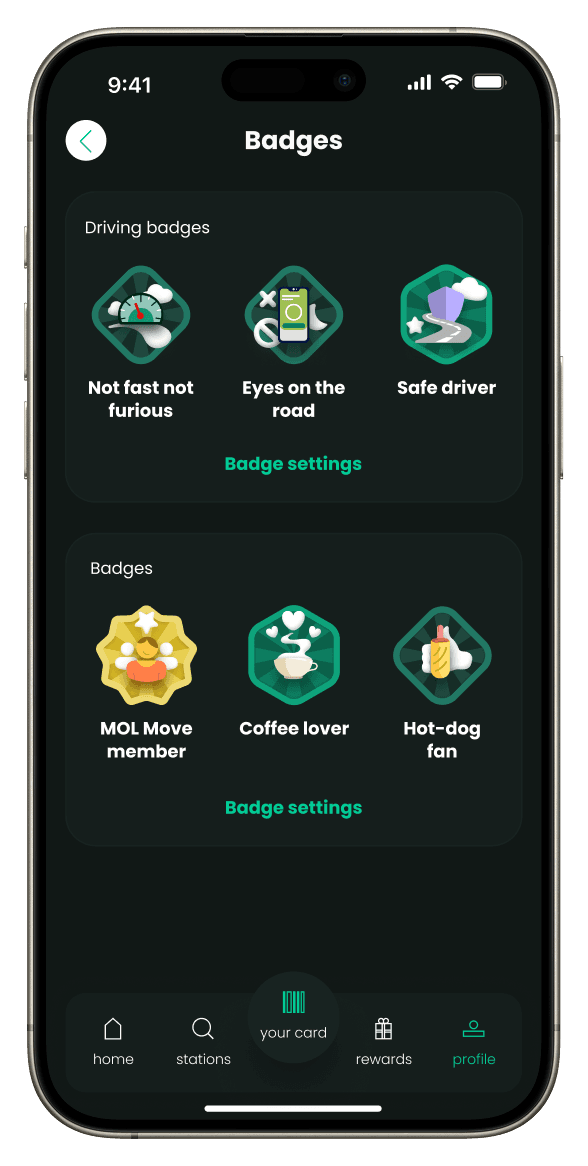
MOL Move already rewarded people with points and tier discounts, but a discount doesn't notice how you drive. Badges were the fix: the first thing that actually notices how you drive.
The goal
Something worth chasing
The goal was to figure out why anyone would want to earn a driving badge at all. A badge only works if it feels good to chase: real recognition for driving well, and the pull of completing the set.
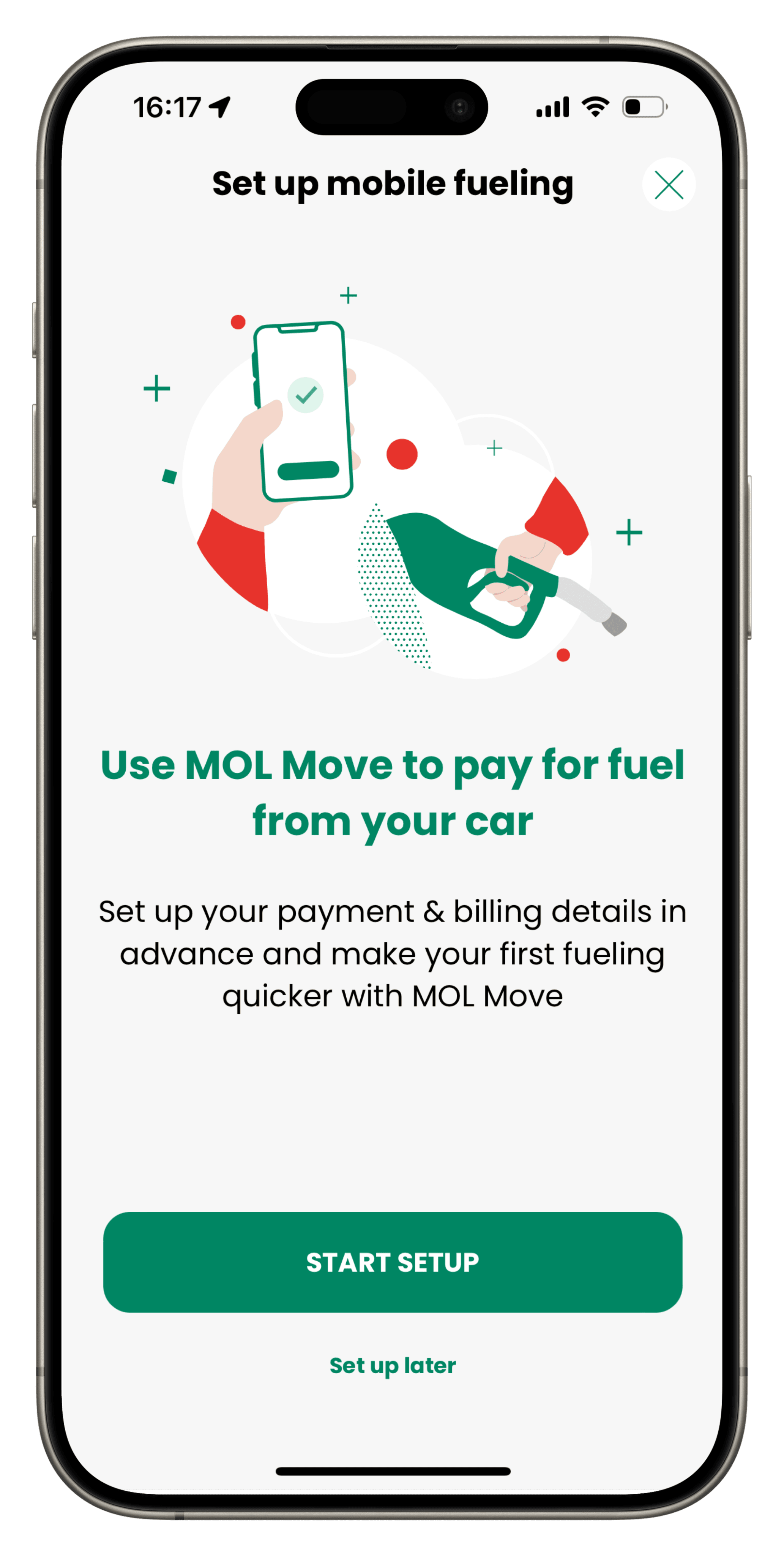
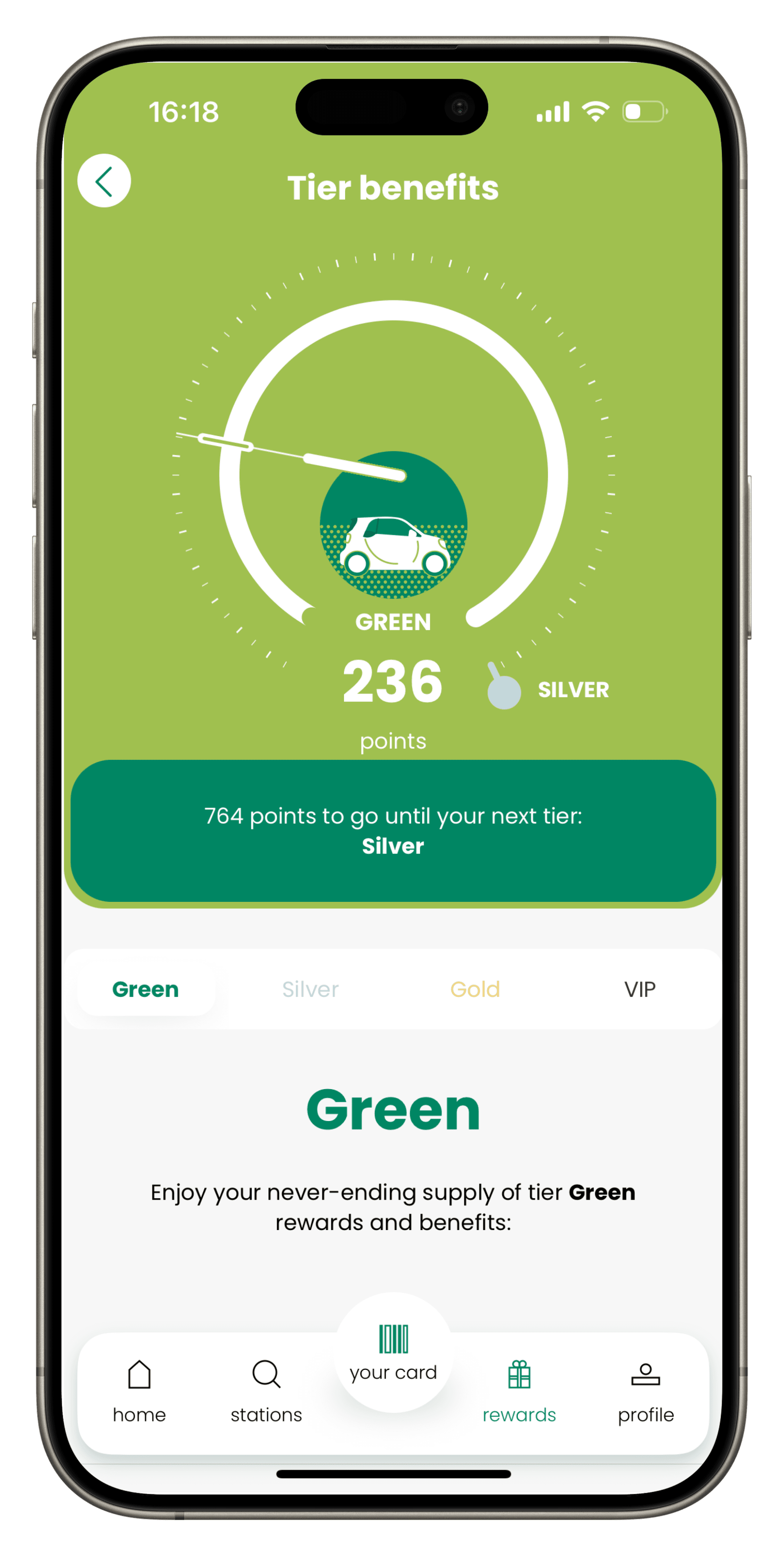
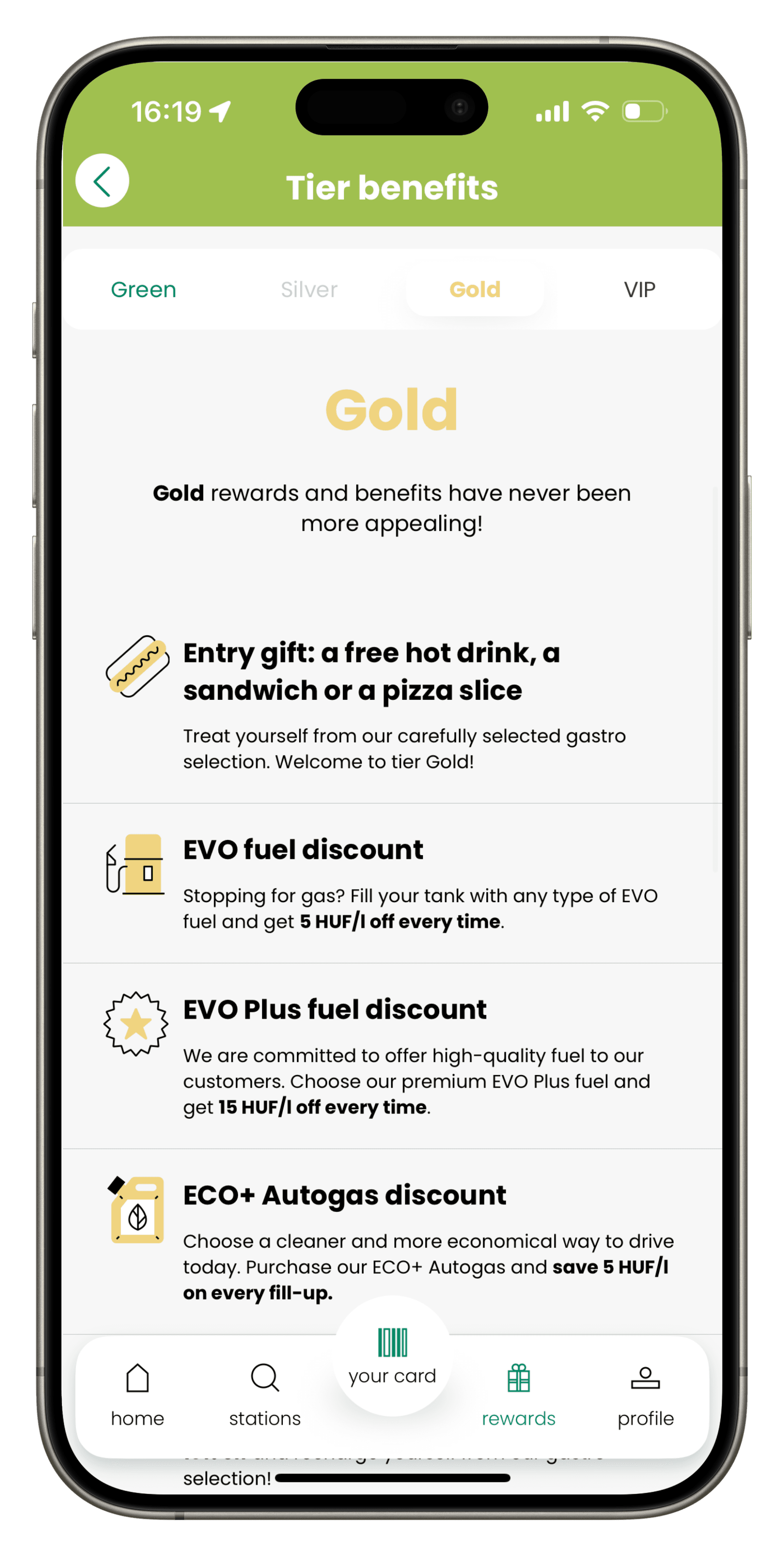
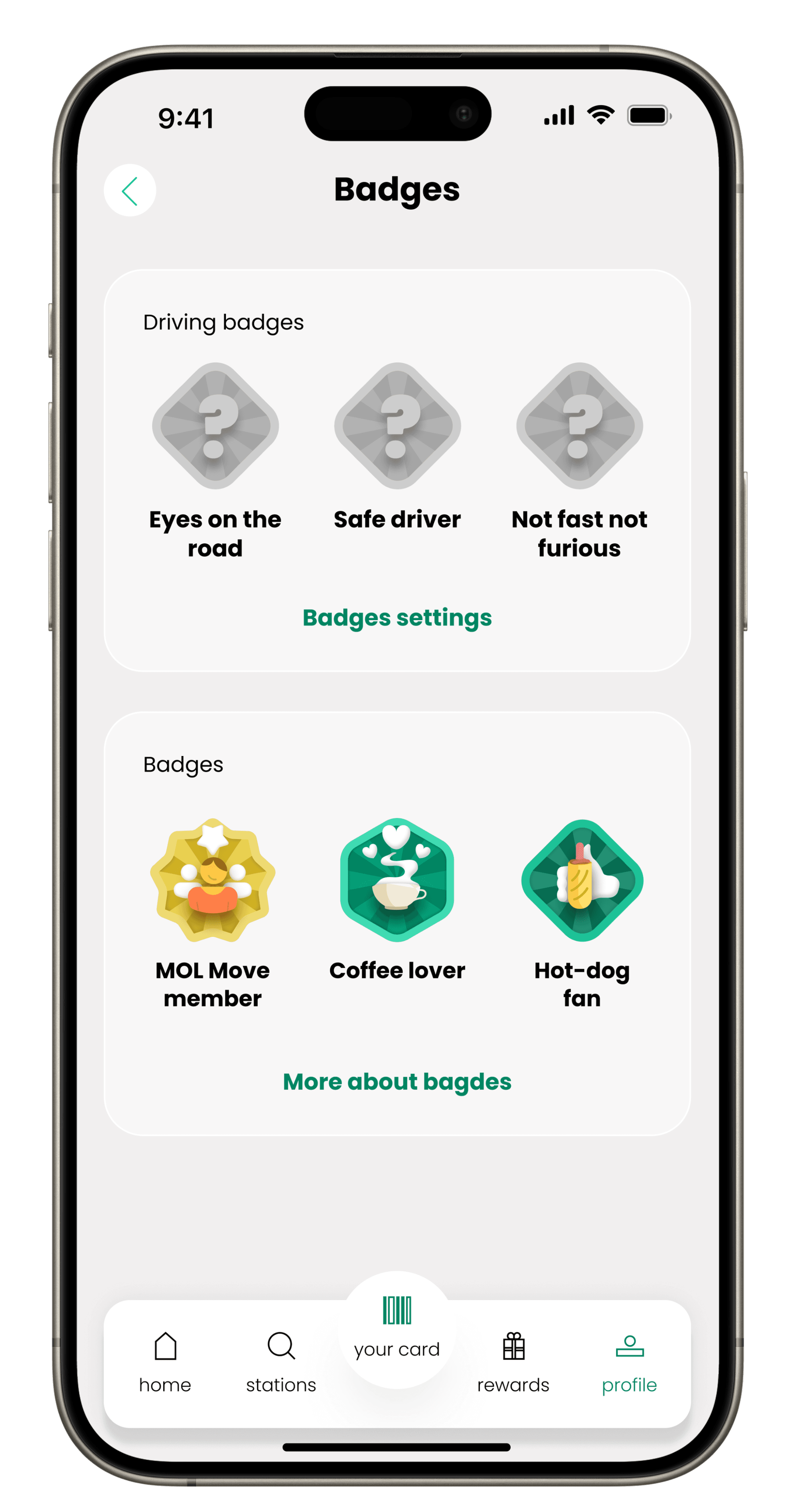
MOL Move at a glance: fuel payment, tiers, and the badge collection.
My process
Designing without fingerprints
Before drawing anything, I studied the existing badges: the shapes, colors, shadows, fluffy details. I also talked to the previous designer and the client, to understand what they actually wanted.
Continuing someone else's style is much harder than starting your own: nobody can tell where the old badges end and the new ones begin.
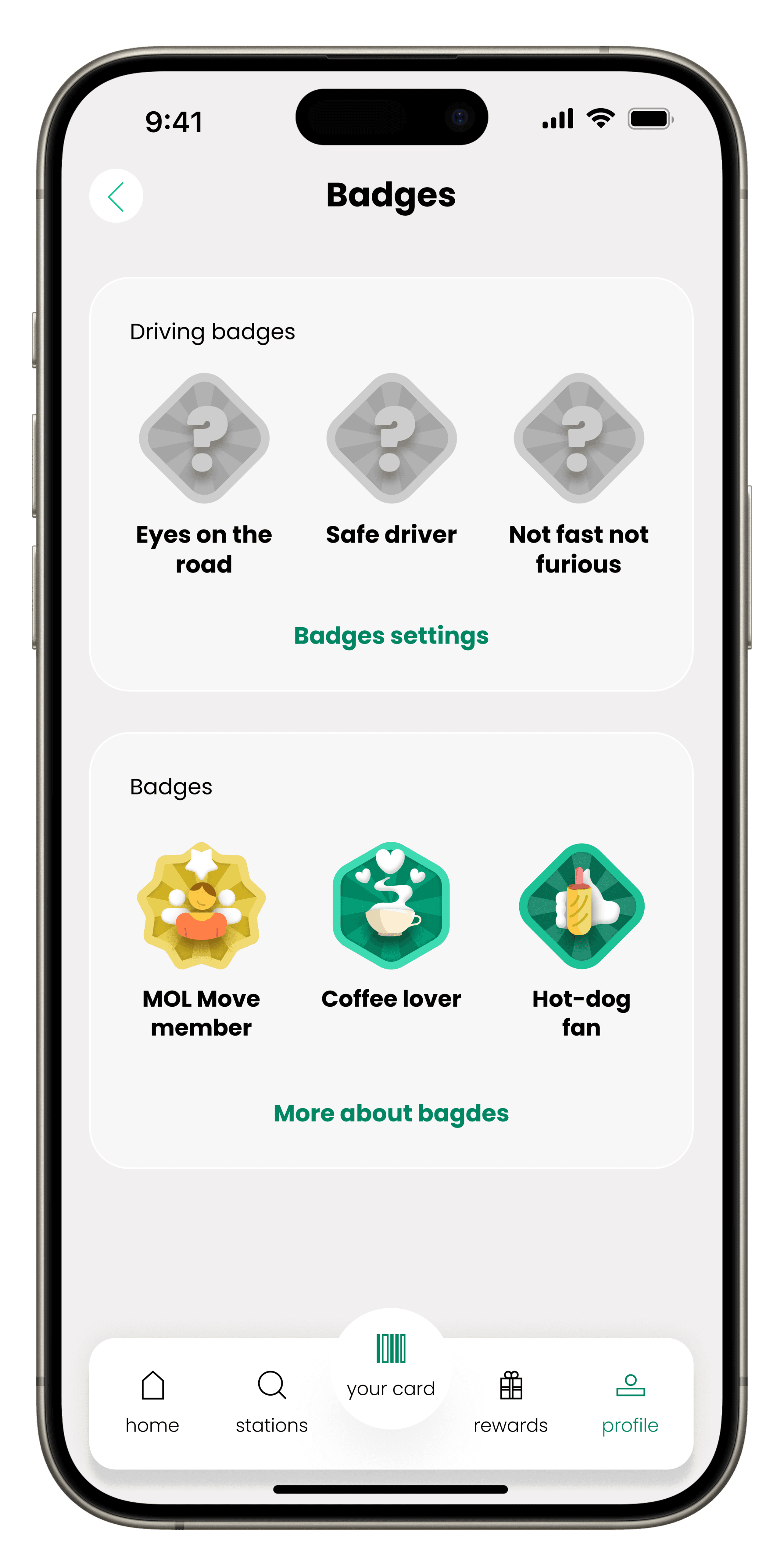
What already existed: the shapes, colors, shadows and fluffy details I had to match.
My part
Day to day I worked in a tight three-person pod: me as the designer, a product manager, and an engineer, with the client in regular feedback rounds. My work spanned design system components, UI flows, icons, and illustrations, but this story is about the badges: my favorite part of the craft, and the biggest challenge too.
The badges
A fuel app can't lecture about speeding
MOL Move rewards good driving: stay under the speed limit, put your phone away, and earn collectible badges. A fuel app can't lecture about speeding, but it can turn the rule into an achievement.
A badge family already existed. My brief: design the new driving series, plus a seasonal advent set, to fit perfectly.
The new sets of badges
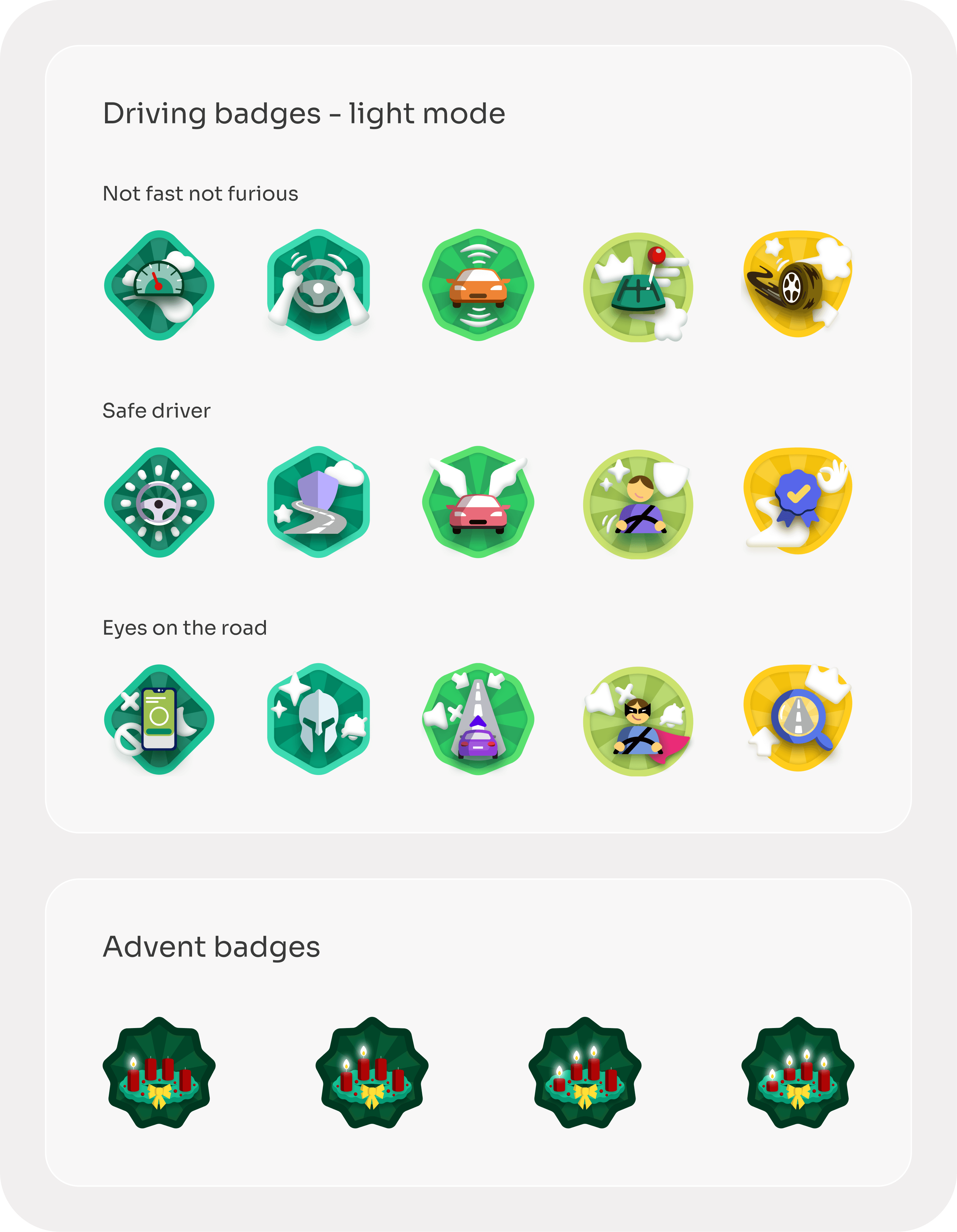
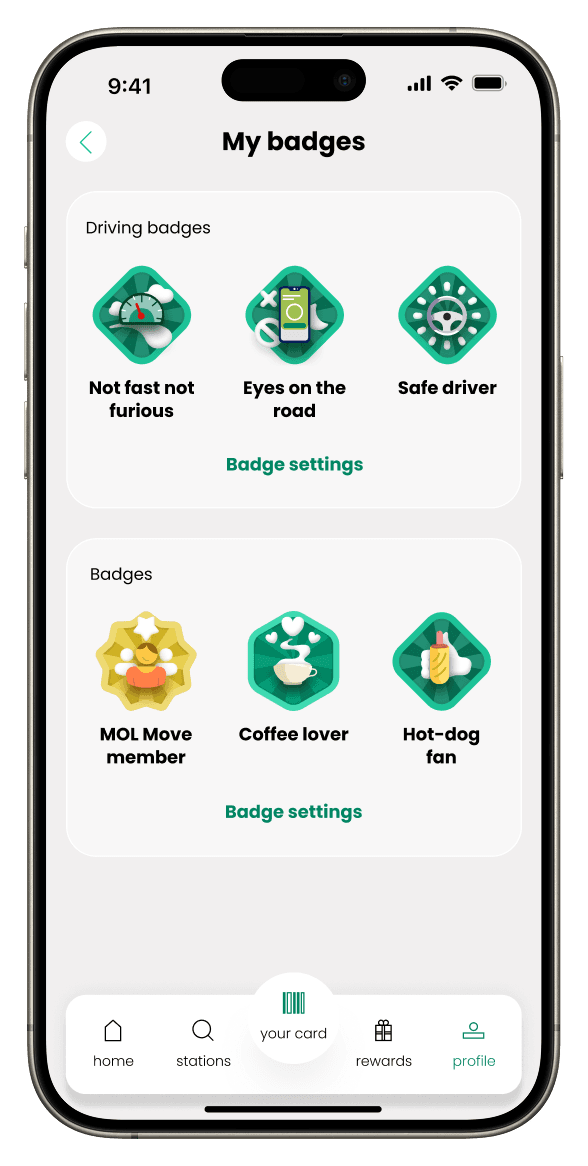
Light mode
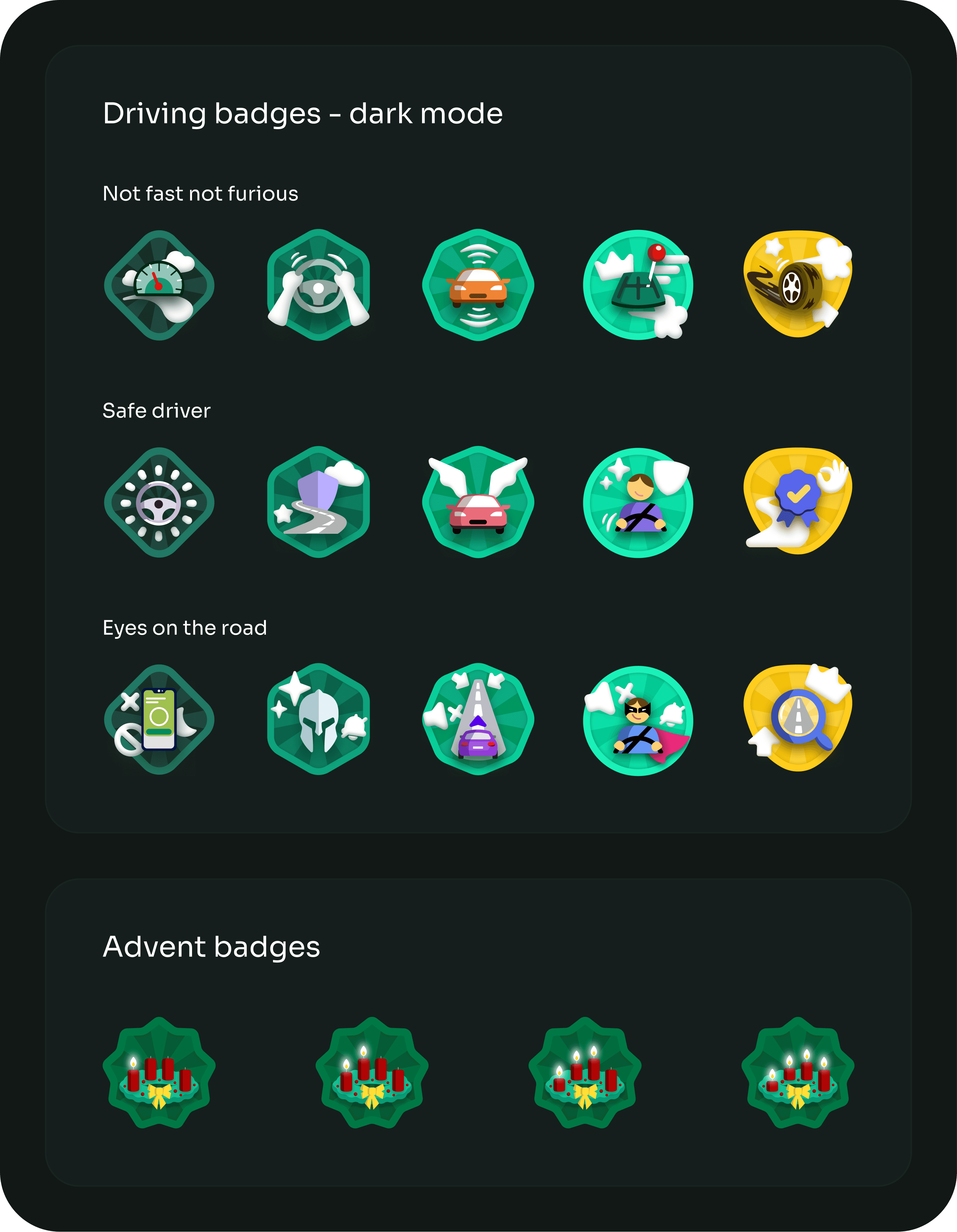
Dark mode
The decisions
Why these choices
Worth collecting
A badge only works if you want it, and wanting is a feeling, not a spec. Every badge had to feel like a small trophy: soft, charming, real.
One pack, one palette. Then the client pushed back
A gap in a matching set nags at you until you fill it. I started tight, then the client pushed for color, so I loosened it and kept everything else locked.
Color adapts, structure doesn't
Every badge had to hold up on both light and dark backgrounds, and still feel like the same reward. Only the color changes, not the badge itself.
Outcome
The full driving series and advent set shipped to production, and the client was genuinely happy. The badges crossed borders too, traveling with MOL's loyalty program rollout. MOL Move serves 750K monthly users, with 100-150K daily opens, and my components, flows, and badges are part of that everyday experience.
What it taught me
Fitting in is a skill
Four months on a years-old product taught me to read a design language like an archaeologist before adding a single pixel to it. It's the opposite of portfolio-hero work, and it's what most real product design looks like: respecting what exists, and making your additions feel inevitable.


 Previous case study